Showing posts with label storytelling. Show all posts

Tuesday, January 14, 2014

11 Reasons You Should Watch More TV

I'm absolutely standing behind this statement: You should watch more television. 

Okay, well, I don't know how much you watch, but I'm here to tell you that if you want to be an excellent storyteller, a weaver of words, you can gain a lot from watching television. 

Yes, OF COURSE, you need to read. You need to read in your genre, your genre-adjacent, your category, and whatever is selling like gangbusters. You need to read broadly and deeply and critically. None of that is new information, and I bet we could get into an internet-flame-war about how much reading one needs to do in order to be well-read (a topic for another time). 

But television can also hone your storytelling and writing skills. Here's how: 

1. It's fast. I can read critically and pick a book apart, examining it for structure and themes and arcs. If it's an adult epic fantasy (my poison of choice), it takes me usually around three weeks to finish. If it's a YA urban fantasy, it takes a day or two. I read Harry Potter and the Deathly Hallows in a little over fourteen hours, straight through. Guess how long it takes me to watch the movies? A little less than five hours. 

With television series available on Netflix and other streaming options, I can watch ten episodes in a single afternoon (not that I've actually done that or anything...*cough, cough*). 
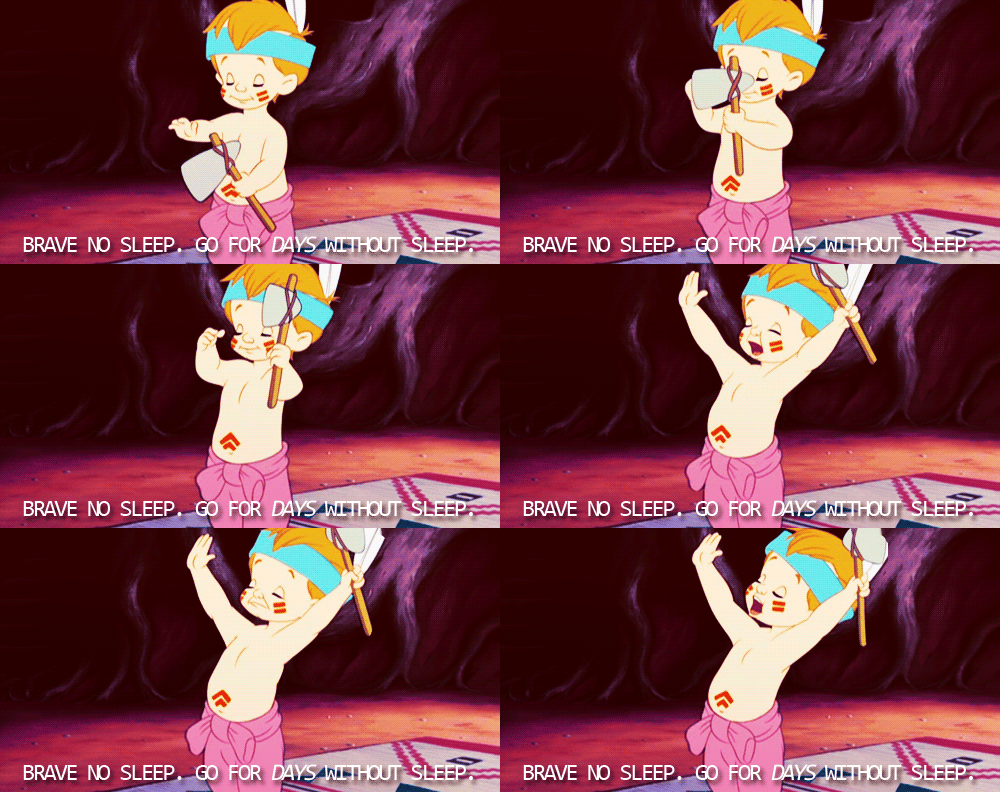
You see a story arc that would have been spread out over months condensed into one sitting. It's easier to catch themes and see character and story arcs when the story is so compressed. 

BONUS: For those with ADD/ADHD or reading disabilities, watching television can help them learn the art of storytelling in a way that's more accessible. 

2. It's appealing. Lots of people watch television. Not very many people are buying books (in comparison). You wanna know what's gonna sell? Take a look at what people are paying attention to. Now, obviously, you can't (and won't) write a tv-series-in-a-book, but you can be influenced by trends. Melanie Jacobson wrote an adorable romantic comedy inspired by The Bachelor (Second Chances, if you're interested) and Buffy kicked off an entire generation of girly-girls-juxtaposed-with-violent-themes. 

By understanding what's popular, you can decide whether the manuscript you're working on is something that will sell at a traditional publishing house, through self-publishing, or if it needs to be trunked for a couple years. 

3. It's hyperbolic. In order to convey characters in sometimes as little as two or three minutes, writers resort to extremes. In the opening scenes of the Gilmore Girls, we see Lane skanking to Rancid and discussing her religious mother and her Korean heritage. We see Lorelai make a joke about being *ahem* promiscuous, and we see Lorelai and Rory bond in a not-normal-mother-daughter way. The chances of that all happening on the same morning? Hmmmm. Slim. Very slim. But it carves out who these characters are right away. 
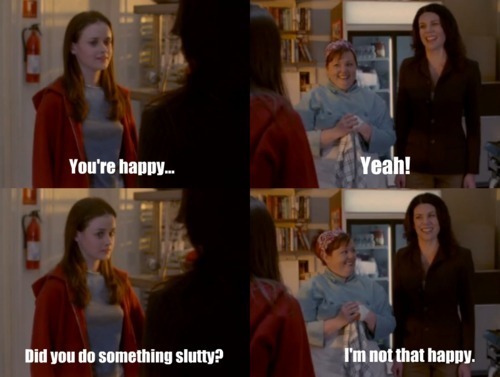
When writing, you can do this, too. This is the infamous show-don't-tell at work. Don't tell us Lane is being raised by strict Korean parents who disapprove of her rock star ambitions: Show her avoiding those parents and gravitating toward the rock n roll. 

4. It's a veritable what-not-to-do. There's a lot of bad TV out there. A LOT. And by watching just some of it, and watching critically, you can see what not to do. You can find flimsy plots, poor character development, tropes, cliches, and just plain bad storytelling all over the place. 

The trick is to identify why it's bad and then comb your own writing for those errors and eliminate them. 

5. It's a more interesting version of school. True story: I know an author that needed to learn how societies fall and flourish for her fantasy world-building. She watched the Guns, Germs, and Steel documentary. It took her three hours. I read the book. It took me five weeks. 

Another friend said she learned a lot of terminology from a crime show (she then researched that terminology to make sure she used it right, but she wouldn't have even known where to begin if not for CSI reruns). 

Documentaries or shows dealing with real-life situations can help you get a feel for a subject you're unfamiliar with. Of course, you'll need to do more research if the show you're watching is dramatized, but television can give you a foundation and a passion for something you might otherwise not have known about. 

6. It's full of real people talking. If you've ever had a beta reader or CP say your dialog sounds unrealistic (and based on my experiences as a CP and beta reader, I'm going to guess that 90% of you have), you need to watch more people talk. Television is really good for this. 

It's even better than real people. 

Yes. It is. And here's why: real people have to think about what they're saying as they say it (ideally, they think about what they're saying before they say it, but let's not get carried away). TV people have the perfect thing already ready. There are no verbal pauses, there are no words being used incorrectly. It's perfect dialog. 
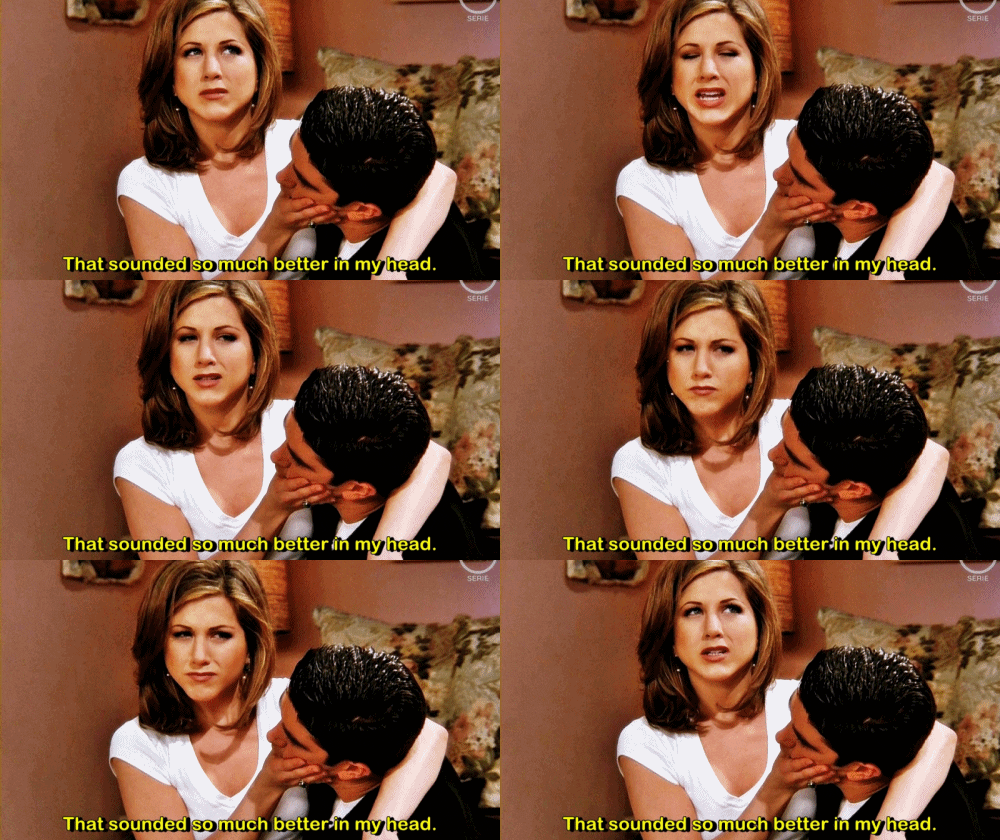
7. It's full of real people moving around and expressing themselves. You need help writing gestures people make while they talk? Or the way a fight moves around a room? Or how people's hands move on each others faces and bodies while they kiss?
TV will give you all of that. Pause. Rewind. Watch again. And again. (try getting the people at the mall to do that for you - it won't go well) 

8. It's visual inspiration. As my good friend Suz said, "One zombie scene is worth thousands of words." 
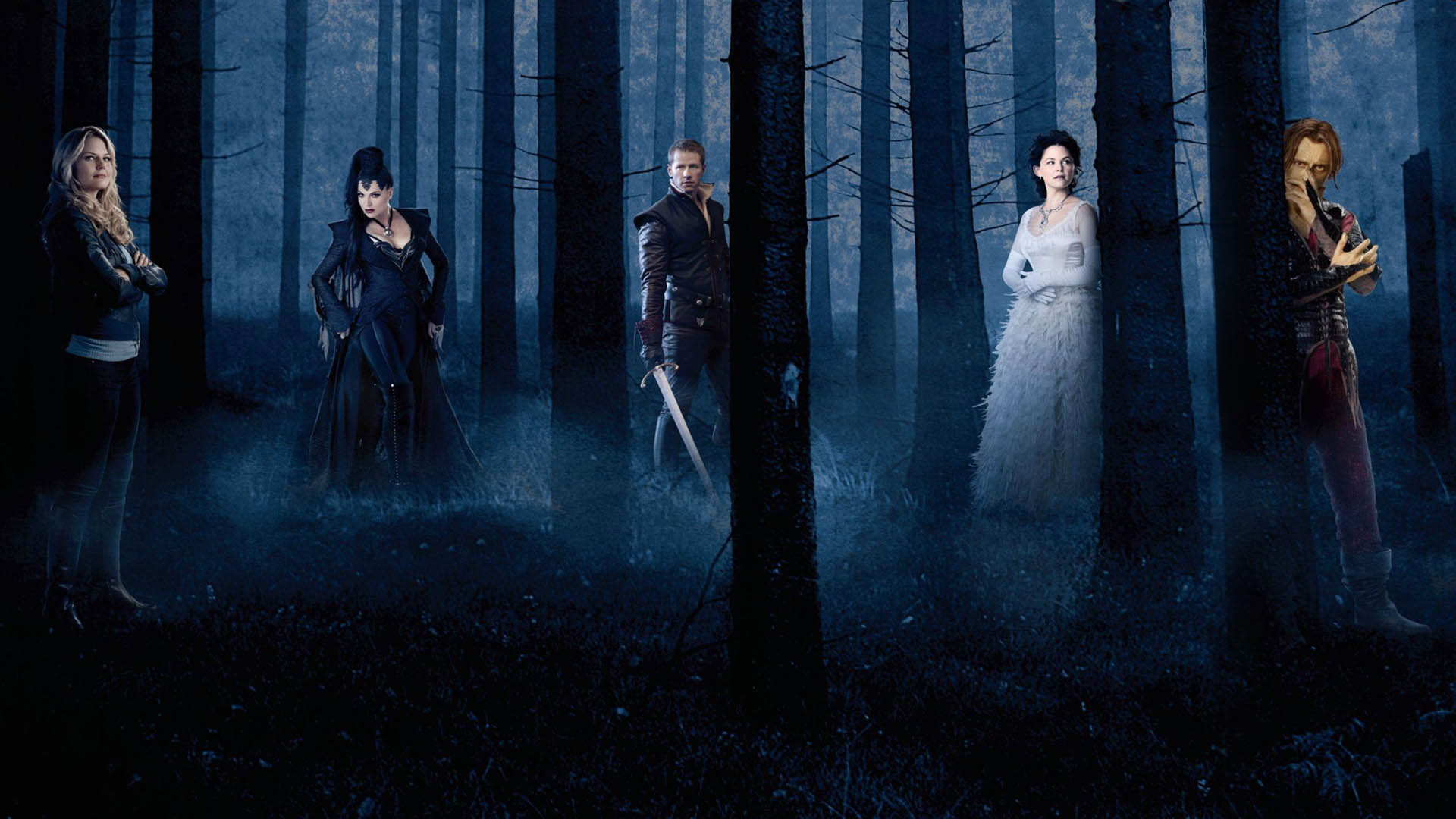
For those of you who pin visual pinspiration, or who scour modeling sites to find the right face to inspire your love interest or main character, try surfing the television. It's easier to get a feel for how these scenes and people can inspire you when you see them moving and living and being. 

9. It's easier to see what's happening. Television shows can successfully juggle dozens of viewpoints and storylines without losing the viewer (hello, soap operas!). Books often struggle with this (with the exception of the ineffable George RR Martin, of course). Watching an ultra-complex storyline full of dozens of intricate players can help you weave a more complex tale yourself. 

Even if operatic stories aren't your thing, seeing these complex stories woven together can help you understand literary devices like foreshadowing and red herrings and metaphors. Seeing them come to life is often easier than reading them. 

True story: while watching Monsters University, my seven-year-old noticed a very poignant piece of symbolism regarding Mike Wazowski stepping across lines. That would not be possible in a book: But he now has a grasp on metaphors and symbolic gestures in a way he could not have done otherwise. 

10. It's full of  hooks and cliff-hangers (and curb-hangers). A television show has approximately four minutes to catch and hold your attention before the first commercial break. And then they have to lure you back after a two-and-a-half minute break. Considering most sitcoms are only twenty-one or twenty-two minutes of actual showtime, that's a big deal. You're gone for one-tenth of their storytelling time. 

And yet they get you to come back. 

How? 

Curb-hangers. Smaller than cliff-hangers, but they leave a question in the back of your mind, something that makes you want to return to see how it is resolved. Then these same shows go away for a minimum of a week, but often as long as four or five months, expecting you to return. 

How?

Cliff-hangers. Television has perfected the cliffhanger. Indeed it was a silent-film serial that gave us the term, and we see it used so often that people expect them. So much so that I've seen a non-cliffhanger-season finale and thought, "WHAT? That's IT? We don't get a big cliff-hanger???" 

If you need help figuring out how to build to a climax and leave it unresolved, watch television. It will teach you. 

11. It's a mental palette-cleanser.  This might be the most important reason of all. Television tells a story in a very brief amount of time - usually a complete conflict and resolution in just over twenty minutes. Some picture books take longer to read than that. You can watch something quickly, or watch a lot of somethings in a row, and get a much-needed break from your writing. 

My favorite shows to watch for storytelling elements are How I Met Your Mother, Gilmore Girls, and The Office. Others have recommended: LOST, Walking Dead, The Vampire Diaries, and Buffy.
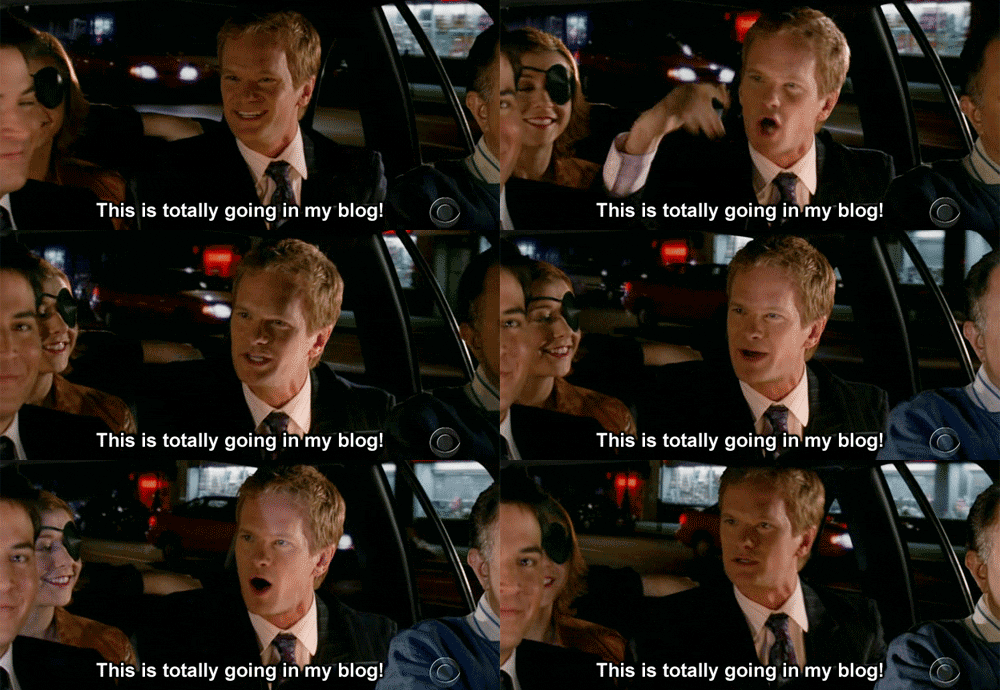
What shows do you watch to learn about storytelling? What shows do you just like to watch? What storytelling tips and tricks have you gained from television? 

Tuesday, December 31, 2013

Writing vs. Storytelling

Once upon a time, like all the way back in 2011, I read a book. The buzz surrounding this book was deafening; there was virtually nothing else talked about on book blogs for several weeks prior to this book's release. I had been on the waiting list through the library for weeks and was ecstatic when my turn came. 

The book was awful. 

Oh, the prose was pretty. Beautiful sentences, evocative paragraphs, sigh-inducing lines. 

But the story was crap. Characters were one dimensional. The plot was flimsier than fancy tissues and more cliche than a Meg Ryan rom-com. Continuity problems abounded - I flagged thirty-nine of them in the two-hundred-ish page book. Physical impossibilities, scientific improbabilities, and flat-out stupidity marred the pages of this book, which happened to be the first book in a series that would go on to be wildly popular. 

On top of all that, the cover was a metaphor so heavy-handed, I'm surprised I could even lift the thing up. 

Lots of other people loved the book, willing to forgive all the problems (which they agreed existed) because of the pretty words. 

I decided to give her another chance; when her next series came out, I read the first book in that series. I felt it was marginally better, but still fell flat. Flat characters. Dumb story. Bad science (in a science fiction book!). 

Contrast that with my very favorite series, which is written ... simply. Yes. Let's use the word "simply". The writer breaks a lot of popular writing rules and many "real" artists claim this author is terrible.

Oh, sure, they agree the story is good. The characters are interesting and well-developed. The plot is tight and intriguing. The red herrings work, the twists are surprising. They laughed, they cried, but it just isn't. good. writing. 

And here's the conclusion I've come to: 

I prefer good storytelling over good writing. 

Let me say that again, lest your eyes deceive you: 

I PREFER GOOD STORYTELLING OVER GOOD WRITING. 

Now, to be clear, the writing needs to be passable. Correct spelling, reasonable usage of punctuation, all the words are used correctly, and all that jazz. But when it comes right down to it, I prefer a good story over something that might technically be more perfect in terms of craft. 

So this is now my aim. I want to tell a good story. I'll do my best to get the technical stuff right in all the ways that matter most, but story beats craft. 

What say you? 


Tuesday, September 10, 2013

Storytelling Tips from HIMYM

I love the show, "How I Met Your Mother" for a lot of reasons. I love that it doesn't paint marriage as a death sentence, I love that they balance reality with ridiculousness, and I love that they plant a dozen Easter eggs every season.

But most of all I love they way they tell a story. Not just the big, overarching story of how he met his wife (which we are just barely getting to, eight seasons in), but the little stories, the ones encapsulated in a season, or a few episodes, or sometimes in a single episode. I've been watching the entire show, from the beginning, and I've collected some storytelling tips. 

Don't start at the beginning. Some of the best episodes start at the end. One episode starts at the end, showing a disastrous end to a party. Then the story jumps back five minutes and tells what happened in the living room to lead to disaster. Then it jumps back and tells what happened in the dining room, then the kitchen. They could have told us, start to finish, what happened, but it would have taken five minutes and been much less interesting. 

Another episode shows the entire gang at brunch, smiling for a photo. As soon as the camera snaps, they all snarl about how they hate each other. Ted then goes back several days, and explains each person's problem, leading up to the brunch and explaining a lot of character stuff along the way. It it much more interesting to see how Marshall's calves are part of the story or why Ted is mad at his father after seeing how it had an effect on everybody. 


Skip over the stuff that sucks. Several times, Ted tells the audience something along the lines of: "nothing interesting happened all summer... let's skip ahead to the autumn of breakups." If it's not interesting, skip it. I don't care if it makes you feel good to tell us how blissfully happy your main character was before she found out her boyfriend cheated on her. It doesn't matter. Skip the stuff that sucks and get to the stuff that's entertaining. 

Some details aren't important. Ted is telling a story that's about twenty years old (he's narrating from the future), so some details are forgotten. People's names, what order things happened in, what day the goat was really in the apartment, etc. Some of it just isn't important. In the show, they fill in the gaps in a comedic way - her name was Blah Blah, for instance. But in our stories? We can just skip them. 


Give your characters genuine flaws. Lily is manipulative. Marshall is childish. Robin is selfish. Ted is kind of a pompous jerk. Barney is cold, callous, and manipulative. And yet you root for every one of them. Those flaws, though real and truly terrible, are also wrapped up in a package that we can identify with. Who hasn't wanted to step in and stop their friends from making mistakes? Who hasn't wished they could slap somebody for being stupid? Or wished that they could put themselves first? Or that they were able to recite stuff in Italian? Or... no. I've got nothing for Barney. But aside from his flaws, he's a loyal and generous man, and he changes his tune by the time we start really rooting for him. 

Tie it all to the main conflict. The show is about how Ted met his wife. Obviously, eight seasons in, we've talked about other stuff along the way. But just when you start thinking, "What does this have to do with him meeting his wife?" it all gets tied together. We learn about the yellow umbrella. Or the roommate. Or the rock band. We see how this string of events pushed Ted into doing something he wouldn't have done otherwise, and it put him on his path to meeting his future wife. It might be related tangentially, but it's all related to the main story. 


Be consistent. The producers of this show are obviously obsessive about continuity. The show does an incredible number of flashbacks and flashforwards and flash-to-this-is-how-it-could-have-gone-but-didn'ts. And they remain thoroughly consistent. Little things that don't really matter to the scope of the show (Lily's hair color, Barney's tie, Ted's sneakers) are all consistent. If Lily had bangs two years ago, and we're flashing back to two years ago, Lily will have bangs. Which means the girls end up wearing a lot of wigs and the wardrobe department must be a nightmare ("We need a designer dress from six seasons ago, in a petite size!" ... yikes) But it serves the story, and I salute them for it. 

Make your character do something stupid. In the very first episode, we learn that Robin is not going to be Ted's wife. Yet he tries to make it work with her. Repeatedly. And every single time, I feel like I'm yelling at Anakin Skywalker to just choose a different path. We know how it's going to end. But it's entertaining. And it's realistic. So Ted keeps trying, and we keep shaking our heads. I've said it before and I'll say it again: Good fiction is made of bad decisions. 


Give your character a rich backstory, but don't talk about it until it matters. Robin was a pop star, Ted doesn't know how to talk about his feelings, Marshall was the youngest and smallest brother, Lily struggles to connect with her father, Barney doesn't know who his dad is. These things all matter, they drive our characters, but they aren't touched on in the first episode. Or even the first season. The details of their past aren't brought to light until they matter - but once they're there, they are consistent with who the character is. 

Motivations are important. Ted wants to get married. Marshall wants to be an environmental lawyer and save the planet. Lily wants to be an artist. Barney wants to get chicks (his words). Robin wants to be a journalist. All their decisions point them in the direction of their goals. Always. Well...


And motivations sometimes change. Sometimes Marshall just needs a good paycheck, so the environmental stuff gets put on hold. Robin questions her independence. Barney falls in love and wants to be treated with respect. And Ted... Ted loses faith. He loses himself. But despite the changes, the characters still make decisions with an eye toward the ultimate goal. He dates girls who are obviously not "The One" but they are necessary to his growth and development. The story is always written with the end in mind. 

What else, friends? Any other great story telling tips from How I Met Your Mother? I'm sure there are more... 

Wednesday, July 11, 2012

Plotting, Structure, and I'm Not the Pantser I Thought I Was

In my search for a way to overcome my inability to finish a story, I've read several book on plot and structure. And through all my reading it became clear that the subtext of all these books was "If you try to pants your way through this, if you don't know how to structure your novel in your bones, you will be rewriting until the dawn of the eternity."

So here's my little confession. I decided a long time ago that I'd rather be a pantser because it "seemed" easier than plotting out and organizing a novel before hand. Yes. I am lazy. But after years of failed attempts, I realized I just didn't have the imagination to pants a story from beginning to end.

So with my latest WIP I've been working through a synopsis, chapter by chapter, to give myself a blueprint of sorts to make this writing thing hopefully go a little easier.

A couple of weeks ago I enjoyed the cool confines of a gorgeous cabin for the ANWA southwest region retreat. Three days of writing and classes and associations with my fellow writers. I loved every second of it.
During the retreat, Tina Scott gave a class where she broke down a book I'd purchased earlier this year, called Story Engineering by Larry Brooks. I recommend it, along with Plot and Structure by James Scott Bell. Both of them explain in step by step detail how to set down before hand what you need to create a compelling and exciting story beginning to end.

Though I'd read the books, having her pull out the important parts made me realize where I was going wrong in my storytelling. I wasn't writing to or away from major points in the story, places where the MC had to make a decision that changed everything for them. And I needed to figure out the rough word count of when those elements need to make an appearance. For me, aiming to write about 80,000 words for a YA paranormal, that means the 1st major plot point needs to happen around 20k, the Midpoint at 40k, and the 2nd plot point at 60k. And everything needs to work towards those points, building tension, or away from them, because of the reaction of the characters to that decision.

Epiphany! It finally clicked! Hallelujah! Right after class I wrote down on a single sheet everything that happens at those major points, plus a few key moments before and after to help me remember what I'm writing toward.
Now I can break down the novel into these smaller, more manageable bits and it won't be an overwhelming task I had supposed to finish a first draft.

I hope.

Saturday, July 7, 2012

Saturday So What: Everything I need to know as a writer, I learned from Buffy


My husband and I have been indulging recently in last year's Christmas present... the full series of Buffy the Vampire Slayer on DVD. I'm sure I don't have to tell you this, but the show is brilliant. Joss Whedon is a freakin' genius. It is my fervent belief that if every writer watched Buffy, the quality of books would vastly increase. Here's what I learned.:

1. Witty irreverent dialogue makes characters interesting. Even the unlikable ones.
Principal Snyder is not a character you should like. He constantly causes problems for our heroine.  It would be easy to cast this character as a throw away. Just a boring voice of authority. Instead, Whedon has given him some of the best lines, making him worth watching instead of a snoozefest.
Principal Snyder: That's the kind of wooly-headed liberal thinking that leads to being eaten.
2. Sidekicks are almost as valuable as the protagonist.
Where would the Scooby Gang be without Willow, Giles and Zander? These characters are all essential parts of story. They add meaningful support as well as comic relief. Often sidekicks are relegated to very surface personalities. It's easy to fall into the stereotype trap. The fat best friend, the nerd, the snotty cheerleader.. you name it and it's been done. They don't grow. So take it farther, make the audience care and give your sidekicks depth. Think of the growth Willow had throughout the series.

3. Angel was the original Edward from Twilight
And Joss Whedon did it so much better. Edward comes off as too good to be true. He has no flaws. It's obnoxious. And unrealistic. Angel is awesome because he has issues. He's not perfect, we don't always like him; but in the end, we all root for him anyway. Have you ever had a relationship that was all sunshine and roses? Where the only problems between the two of you could be worked out through a little DTR (define the relationship). Didn't think so. Buys make you cry. Love makes you cry.And sometimes... true love doesn't conquer all.


4. Sometimes life sucks.
Throughout the series, Buffy goes through hell. How often do we read books where the main character is never in any real peril. Nothing bad really happens to them. Buffy got the crap beat out of her on a weekly basis. She doesn't often get what she wants, but she does what is needed. Don't be afraid to hurt your hero. If there is no true peril, the story isn't interesting. And if it's obvious that the hero will come out all peachy keen... why would we keep turning the page?


There are so many more lessons, but I think I'll leave it on just one final thought. Fun. In every Joss Whedon project I have ever seen, it is clear that he has fun. Look at Buffy, Firefly, Avengers... they do well and have cult followings because he has fun with his writing. When the writer has fun, the audience can't help but join in.

So until next week, live by my personal author tagline -- Having fun on the page

LinkWithin

Related Posts with Thumbnails