Showing posts with label traditional publishing. Show all posts

Thursday, October 9, 2014

Interview with Cassie Mae: Self-Publishing vs Traditional Publishing

by Katy White

A few weeks ago, I had the chance to interview the brilliant Jolene Perry about the differences between self and traditional publishing. Today, I'm excited to share another interview with another brilliant author, Cassie Mae, who has oodles of experience in both forms of publishing! Cassie is the author of a ton of adorable books, including the adorable Reasons I Fell for the Funny Fat Friend and her new release, Secret Catch, which she cowrote with Jessica Salyer!

Without further ado...

Cassie, you’re a successful author with loads of wonderful books that you've published both traditionally and self. Yet, I've seen enough cute pictures of your family on FB to know you’re also a wife and mother. How do you do it all?

You have to come out with the hardest question first, lol.
I don’t.
Or I do.
I don’t know, lol.
Mainly, I prioritize. I write 1000 words a day (or try to) and if I set aside a half hour-45 minutes a day to do so, then I get it done.
But sometimes, I don’t write, and I make it up later. Honestly, I just make time for it.

How did you get started writing? In which type of publishing did you get your break?

I got an agent in 2012, but while I was on submission I decided to self publish in January 2013. Also in January, I signed two deals (a two book deal with Random House and a two book deal with Swoon Romance), so it kind of all happened at once. I can’t say which one was my big break, haha.

What have you learned about publishing since then?

It’s hard, lol. Lots of pressure and deadlines and if I thought I was crazy before, it no way compares to how I am now. But I’ve also learned when the best time to release a book is, what works marketing/promotion wise and what doesn’t, and also when to run from a contract and when to sign.

Where would you tell someone interested in self-publishing to start?

Focus on your book. The quality of your book is more important than any other thing in self publishing. Once you have had the thing through several critique partners, beta readers, and an editor, and you are 100% satisfied in its quality, then you can start looking at the other stuff. Whether or not you want it exclusively on Amazon or not, cover designers, stock photo sites, formatters, if you want a publicist, etc.

Why do you pursue both types of publishing? Do you have a preference between them?

I actually wrote a blog series on the pros and cons of self publishing and traditional publishing :) I’ll put the links right here:


You publish several books a year. How do you write So. Many. Words?

I’ve seen people write 4-5K words a day. I can’t do that. On a good day, I write more than 2000. So I’m not a big chunk word writer. I do a little bit at a time and in sprints. Half hour of nothing but writing. Sometimes I get 1000 words in that half hour, sometimes 200, but I do it every day. Sometimes twice a day.

How do you keep your ideas and characters fresh?

I read a lot. I see what’s out there and what’s missing or less of and I say, I want more of that! Then I write it :D

How important is editing in self-publishing versus traditional publishing? Do you recommend hiring an editor in either/both?

Editing is the most important in both aspects. Not everyone can afford an editor, so I understand not hiring one. If you choose not to, you better make sure you have kickbutt critique partners, and some who are experienced in working with an editor.

I don’t know why you’d hire an editor for a traditionally published book, because the editor is given to you. Hopefully you’ve got yourself a good agent who got you a credible publisher. Those editors have been doing this a long time.

Everyone talks about the importance of covers in publishing, but especially in self-publishing.  Do you agree? Where do you go to find your adorable covers?

Yes. As much as I hate that people judge books by their cover, they do. Your cover sells your book, your words keep people coming back.

Some of my covers are stock photos, some are original photos. Because I can afford to do it now, I try to get original photos for every book I self publish. (I also try to talk my publisher into those as well ;))

What are the advantages/disadvantages to traditional publishing vs. self-publishing?

Oh! I’m just going to point you to my blog series again :D


Any last words or advice for authors looking to publish in either format?

Do not slack on research.
Know what your contract says before you sign it.
Have fun :)
Writing a book in a month and publishing it the next is not the way to do it.
Edit.
Edit a lot.
Have fun :)
Do not get discouraged.
Keep comfort food within arms’ reach.
Have fun :)


Cassie, thank you so much for your fabulous help and your fabulous, smoochy books! We appreciate your time and perspective. Now, to read Secret Catch...


You can find more books by Cassie here! For now, though, if you have any questions or comments about either form of publishing, please sound off below!

Thursday, September 11, 2014

Interview with Jolene Perry: Traditional vs. Self Publishing

by Katy White

I recently had the chance to interview the lovely and talented Jolene Perry about the differences between traditional and self publishing. She graciously took the time to answer question after question, and I'm beyond grateful for the perspective and information she provided. Enjoy!

K: So first off, hey! Thank you so much for being willing to let me interview you!
J:  And thank YOU for wanting to interview me :) 

K: You’re a successful author with, like, a bunch of fabulous books (and some seriously gorgeous covers) under your belt. *blushes furiously* Yet you’re also a wife and mother. How do you do it all?
J:  I have these house elves. Hermione is endlessly cross with me over the situation ;-) I’m kidding. I write in small spurts. I play with kiddos or do laundry, and think about what I want to write next. That way when I sit down to write, I really use that time – usually just 45-60 minutes at a time, or less. Getting a 3 hour “break” to write, doesn’t really work for me. I also separate “author” stuff – social networking/monies/contracts/emails with the FUN stuff “writer” stuff. Helps my brain. The “author” stuff I can sort of do while hanging with the family (sort of) but then I’m like – Mom needs 30 minutes to write. NO TALKIE TO ME. And for 30 minutes? That’s really good for my kids’ independence, and really great for me and writing. Also. Both my kids are in school now, and I’m at home… (Yes, it’s so very awesome and makes every single late night feeding and/or diaper change worth it).

K: In which type of publishing did you get your start? Traditional or Self?
J:  Traditional. Cedar Fort Industries published my first book and Tribute Books published my next two. Then I left my agent and had all these finished books, so I published a few of them on my own :)

K: What have you learned about publishing since then?
J:  This is about a month of blog posts. But I’ll simplify: I’ve learned that authors are basically professionals at waiting. I’ve learned that all the marketing in the world might not help and sometimes no marketing at all ends up being your best seller. Also. Publishing is first and foremost a business. If you think art will win, you are wrong. I know. I sound so jaded, but it’s true and I’m okay with that. I have to be or I’d go insane. The final thing is that sometimes it’s just the right book to the right person, at the right time – this goes for agents as well as editors.

K: Why do you pursue both traditional and self-publishing?
J:  They serve different purposes for me now. I’ve separated it slightly further than I did a few years ago. My self-published books are my fun romance books that I don’t want to rip out and stomp on my heart (like I do with my YA). The publishing process with being on submission and round after round of edits and the nerves involved in waiting for covers and releases are STRESSFUL. So my non-YA books I self publish, and it’s SO much more relaxing.  

K: Do you have a preference between them?  
J:  No preference. Just different experiences for different types of books.

K: Do you ever feel burned out writing? How do you reignite the flame, so to speak?
J:  I sometimes feel burned out on a specific project, which is usually okay because I do not sell on proposal (even though my publisher would be fine with it). BUT when I want something out or done, I find a way to fall in love with my characters. If I love them enough, I’ll have to tell their story and I’ll have to tell it well. For this I run, walk, Pinterest, or use iTunes.

K: Self-publishing is still fairly new and still often criticized. Where do you think self-published authors typically go wrong?
J:  The number of covers I see that look cheap is just staggering. SPEND THE MONEY ON A GOOD COVER. And editing… If you don’t have amazing editor friends, hire an editor. My trad pubbed books go through usually 3-4 readers and then through my agent. And then I usually do 3-5 rounds between first pass, copy edits, and final pages with my publisher. People do not take the time to edit properly. (Typos even happen in books from the big 6, but a lot of edit rounds will weed out sloppy writing).

K: What do you think successful self-published authors do differently?
J:  They write more sex?? Lol. I’m teasing. (a little). I think a lot of it is having an online presence that’s more than just pushing books. Covers are HUGE. And being nice goes a LONG ways. (Katy's note: Jo has some seriously GORGEOUS covers. She knows what she's talking about.) 

K: How does your process differ in getting a book published traditionally versus self-publishing? Do you go through the same editing/critique partner/beta reader process?
J:  I go through ALL the same process aside from I get to design my own books covers (or have my genius friend Allie do them). I do the same rounds of edits that I would before sending to my publisher. Although, I cannot imagine a time when I will ever read one of my own books and not want to tweak things.

K: Where would you recommend someone interested in self-publishing start?
J:  Google, lol. I think good critique partners are a must. The first time you format and upload, it’s frustrating and baffling, so find a friend who has been through the process before. Or hire out formatting and cover and stuff. I know there are a million resources out there, but since I do it all myself, I’m not the best person to ask.

K: One of the advantages people often cite to traditional publishing is the marketing support. How do you go about promoting your books that are self-published? Do you do any personal promoting for your traditionally published books?
J:  Honestly? I used to pay for big blog tours, but my two biggest tours are my two least selling books. No joke. It’s a little different for me now because I don’t have to do as much to sell the same number of books as I used to. I’ll give you my random secret… but only here... I make the book free for the first day and say NOTHING. Then I do 0.99 for a couple days for my friends, and that 0.99 sale I’ll post about. Usually that gets me a few reviews, and some buzz, and then I let it ride. I’m not great at marketing b/c it stresses me out, and I find that almost nothing determines the success or failure of a book. I self-publish because it’s much less stressful, so if I spent a ton of time marketing, that would negate the low-stress factor.

And people who walk into a book contract thinking they’ll get publisher marketing support are dreaming. I know that’s rough, and of COURSE a publisher puts some money behind marketing, but most don’t put a ton. Let’s say a particular publisher puts out about 50 books a year (I do have one in mind, an imprint of a big 6), probably 10 of those books gets pushed. The other forty are primarily left to their own devices.

K: Any last words or advice for authors looking to publish? 
J:  Find a good support group of other people doing what you’re doing. Don’t forget about your awesome family. Always remember that you’re making up stories, not performing brain surgery. Don’t take yourself too seriously. HAVE FUN.

K: Huge thanks to Jo for her fabulous help and fabulous books! (Side note: I ended this with a weird kissing sound, so if we never hear from her again, you completely have me to blame. But she's a rockstar and a total pro, so...meh. I'm banking on her forgiving me.)


All: If you have any questions about self or traditional publishing, please comment below and we'll try to get them answered in future interviews!


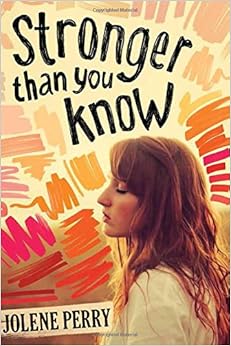
Also, for more information about how to connect with Jolene and about some of her books, including her new release, Stronger Than You Know, check the links below. 


I Blog  


Saturday, July 14, 2012

Saturday So What: Endorsements

Welcome to my nightmare of the week. Okay, more like my nightmare of the month that I have put off until this week. So What frightens me and sends me straight to bed at 8:00 pm rather than staying up and getting it done? Seeking endorsements for my book, Finished being Fat, that is due to go out to the printers in a few months.

So why have I put it off? Because I'm scared to death of asking someone to read my book and give a positive endorsement of it. What if they don't have a positive endorsement of it? What if they think it's the most poorly written book that should never have been published in the first place? *pant, pant*

It was one thing to send it out to agents and publishers, but now I'm sending it to other authors that I know and respect. I actually care what they think! What if they hate it? The thought makes me want to hurl as I type.

The Power of Positive Book EndorsementsThis trepidation has kept me from sending out the emails and ARC copies for weeks. A thought occurred to me two days ago. I'm worried that no one will endorse my book. Well, if I don't ask... no one will endorse my book.

So I put my big girl pants on and sent out some requests. We'll see what comes back. In the meantime, when you are asking for an endorsement, here are a few things to keep in mind.


1. If you have a connection, use it.
If you know the person you are asking on let's say an acquaintance level, remind them how you know them. Or that you know a friend who suggested they might be interested. A person will be much more willing to help out if they know who the heck you are.

2. What's in it for them
In your letter or email, make a brief and succinct case why it would benefit them to endorse your book. At the end of their quote will be a tagline, reciprocating one of their books or website. Or you could have a marketing link to their products on your website.

3. Make it easy
Make the process as easy as possible for them. Offer to write a few examples that they can choose from and add their tagline to. People are busy, and might not have time to deal with coming up with a good blurb. If it's in front of them, they might be more willing to help out. This really especially applies to non-author type people who might not know how to craft a good blurb.

4. Give them the book
Send either a hard ARC (advanced reader copy) or a digital ARC to them and thank them for their time. A lot of times an ARC isn't polished all the way yet and may include grammatical errors still. (guilty!) Just remind them that it still has to be edited by your publishing company. If you are self publishing, it should already be a pretty polished draft.

And lastly...
Remember the worst that can happen is they say no. It might have nothing to do with you. They might have a contract that doesn't allow them to endorse books by other publishers. They might be busy. They might be jerks. But you'll never know if you don't ask.

If you have credits in the field of fitness, weight loss, or body image- or have a PHd after your name...and would like to give me a blurb for either my website or the book, give me a buzz and we'll chat.

Otherwise see you next week. Visit me at the Finished being Fat blog and Heaven's to Betsy. I warn you, its a wee bit controversial this week.

Wednesday, April 27, 2011

Power To The People

I have watched the tumultuous upheaval of the publishing industry with a bit of distance and a lot of interest. Interest because I hope to be among the published masses someday, and distance because I don't think it's going to be any time soon. (At least if my struggles with my WIP continue unabated.) It'll be a year or two or ten before I will be able to call myself published. But by then, what will the industry look like? More knowledgeable people than me talk about this endlessly, and I'm not here really to add what little I know to the conversation.

What I do want to bring, however, is a little perspective. I tend to think in analogies, so here's one for you.

Once phones looked like this:
 And it was amazing! People couldn't conceive of such a remarkable thing. Some people even called it the Devil box, they were so sure it was evil inspired. You could pick it up and have to tell the operator who you wanted to call, and wait for them to direct your call to the appropriate place.

After a few years the phone grew to this:

You could dial the place you wanted to call yourself. And for 70 years or so, this was the standard, with slight variations.

Then along came mobile phones, phones you could actually walk around with, instead of being tied with a cord to a base and telephone line.

Once cell phones looked like this:
And we poor peons who couldn't afford to even think about such a luxury oohed and ahhed over it.

Fast forward to today:

This generation 4 iPhone can do more than several 1980s computers put together could. And that's besides being a mobile phone.

My point is when the technology began, we looked at it in wonder. How could it possibly get better than this, we said. And yet it did. Again and again and again. And it will continue to evolve as consumers demand different things from the phone industry.

This is happening in the publishing industry. We had a standard, a framework that everyone recognized as the only possibility. And yet times change. People's demands change. All sorts of factors go into this force for evolution.

 In my mind we are at the equivalent of the 1980s cell phone revolution in terms of publishing. There are things going on now that we never thought would happen. But they are. Do we know where they'll end up? We can guess and conjecture, but like watching an old episode of the Jetsons, we won't know if our ideas are too tied to our present experience, or if they're truly revolutionary. (Watch an episode, and see if you don't see things that we already to better or differently than they thought when they made the show. Cash money vs. a card? Or just scanning something in your phone?)

That doesn't mean don't write or publish or submit or self-publish e-books. Life still has to be lived. And without that demand for the industry, it would die out. I just think it'll be fascinating to see in 10, 20, 50 years where the publishing/writing industry has gone. I hope you'll all be along on the ride with me.

Any comments on this post will count toward our mini contest!

LinkWithin

Related Posts with Thumbnails